 "Weather By Giannetta" "Weather By Giannetta" |
|---|
| "Weather By Giannetta" |
|---|
"Charles A. Giannetta"
|
|---|
 - "This page best viewed with "Microsoft Internet Explorer". Text Size "Smaller"
Picture 1024 X 768 - 17 or 21 inch Monitor
 - * * Gini & Charlie's Weather & Meteorology Glossary Page * * - - * * Gini & Charlie's Weather & Meteorology Glossary Page * * -
A |B |C |D |E |F |G |H |I |J |K |L |M |N |O |P |Q |R |S |T |U |V |W
|X |Y |Z
|
|---|
"P"
Palmer Drought Severity Index: Index used to tel the severity of drought conditions .
"Precipitation Forms"

1.Drizzle: Precipitation composed of fine drops with diameters of less than 0.02 inch (0.5mm).
2.Hail: Small Balls or pieces of falling ice in round or irregular lumps.
3.Ice Pellects: Transparent or translucent round or irregular shapes pellets of ice having a 0.2 inch (5mm)or less.
4.Rain: Falls is the forms of drops larger than 0.02 inch (0.5 mm)
5.Snow: Ice crystals which have six points.
6.Snow Grains: Very small, white, opaque grains of ice.
Pyranometer: Back To Top OF Page
Soot).
© 1998 - 2013 Charles A. Giannetta
Parameter: Elements which make up a weather observation such as present weather/visibility/temperature/pressure, etc.
Parcel: A small volume of air.
Partial Obscuration: When parts of the sky are hidden from surface based: Smoke: Fog: Snow: Rain: Etc.
Partly Sunny: 3/8 to 1/2 sky coverage.
Peak Gust: Highest instantaneous wind speed.
Peak Gust Recorder: A weather instrument which measures and records the peak wind speed.
Peak Wind Speed: The highest wind speed observed.
Penumbra: Lighter protion of "Sunspots" with temperatures about 5,400 degs. Kelvin.
Perihelion: The time of the year when the Earth is closest to the Sun, (About Jan. 4).
PH Scale: A scale which measures the amount of alkalinity or acidity of different substances.
The PH of pure distilled water is 7.0
Photosphere: The surface of the sun.
Photosynthesis: When plants use sunlight, water and Carbon Dioxide (CO2) to manufacture their food
the waste product produced is (Oxygen).
Pibal: - "Pilot Balloon" "sent aloft to determine the wind speed & direction up to 60,000+ feet which is than tracked with a "Theodolite".
PIREP: Acronym for: Pilot Weather Report".
Plan Position Indicator: (PPI) A radar monitor scope which displays the location of precipitation using the range in miles and degrees in azimuth.
Planetary Weather Systems:
Northeast & Southeast Trade Winds located at 0 Degs. - 30 Degs. N. & S. Latitudes.
Westerlies at 30-60 Degs. N. & S. Latitudes.Polar Northeasterlies at
60 Degs. to 90 Degs. N. Lat. Polar Southeastlies at 60 Degs.- 90 Degs S. Lat.
PM: Post Meridiem Time: Between Noon and Midnight.
Polar Easterlies: Located at 60 - 90 degs. North Latitude.
Polar Front: Located along the northerly jet stream.
The "Polar Vortex" also called "Arctic Cyclone" is a
large scale Cyclone which occurs over the poles. This weather system contains
extremely cold air and are some 1,000 to 2,000 miles in diameter.
The air circulates in a counter-clock-wise direction.
This system grows in strength in the winter months...When this weather system moves
south over the US. it brings with extremely cold temperatures and may last for
several days producing record breaking low temperatures.
Pollution: Anything that contaminates or alters the normal structure of the component such as: Water Pollution: Air Pollution: Ground Pollution:
Potential Energy: Something that can do work such as a train locomotive.
PPM:Parts Per Million.
Precipital Water: Amount of water in a vertical column of atmosphere.
Precipital Water: Amount of water measured in one inch of snow.
Precipital Water Chart: On the Precipital Water Chart the top number is the amount of water in hundredths of inches.
The bottom number is the percent of normal for that time of year.
Precipitation: Water in the form of snow, rain. sleet, hail which fall from clouds to Earth.
Precipital Intensity: The rate at which precipitation falls. Light/Moderate/Heavy.
Precipitation Rate: The amount of liquid, water or solid the reaches the ground at a certian amount of time and measured in a raingauge.
Pressure Altitude: The standard altitude of a given pressure: Example 500 mb = 18,000 ft.
Pressure Change: The difference between the beginning reading of barometric pressure and the end of a particular time reading.
PRESFR: Pressure Falling Rapidly...When the pressure falls at the rate of 0.06 inch or more per hour.
Pressure Gradient: The closer the isobars the faster the wind speed. Called close/tight or steep pressure gradient. The wider
apart the isobars the slower the wind speed. Called: A "Weak" Pressure Gardient.
PRESRR: Pressure Rising Rapidly...When the pressure rises at the rate of 0.06 inch or more per hour.
Pressure Pattern: The rise and fall of pressure during a designated period of time.
Pressure Tendency: The amount of pressure change during a certain period.
Pressure Unsteady: When pressure fluctuates .03 inch of mercury during a certain period of measurement.
Primary Air Polluants: Chloro-Fluro-Carbons: Hair Sprays: Freon: Gasolene: CO2: Sulfur: Nitrogen: Carbon:
PROG: Short for: PROGNOSTIC CHART: A weather Chart (MAP) used in weather forecasting for extended periods: 12HR: 24HR: 36HR: 48HR: 96HR: 30Day: 60DAY: 90DAY:
PROGNOSTIC CHART: A weather Chart (MAP) used in weather forecasting for extended periods: 12HR: 24HR: 36HR: 48HR: 96HR: 30Day: 60DAY: 90DAY:
Pseudo-Adiabatic Lapse Rate: The process of rising air adiabaticly without adding heat or moisture: The dry adiabatice lapse rate of 5 Degs. F, 3 Degs. C., per 1,000 feet.
The moist adiabatic lapse rate of 3 Degs. F., 1.5 Degs. C., per 1,000 feet.
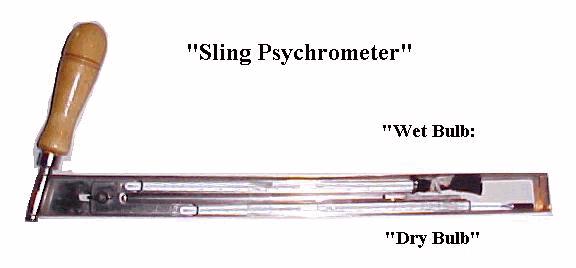
Psychrometer: A weather instrument used to measure relative humidity.

Weather Glossary...WEATHER BY GIANNETTA,Giannetta,Charles,WA3RSQ,EL-NINO,Weather,Magazines,Meteorology,Hurricanes,
Tornadoes,Floods,Clouds,Radar,Forecasting,Thunderstorms,Lightning,Atmosphere,69,Grand,Prix,
WXDATA,Bath,Pa,USA,CD ROM,Weather,Disk,Meteorology,Graphics,Research,weatherbygiannetta.com
